
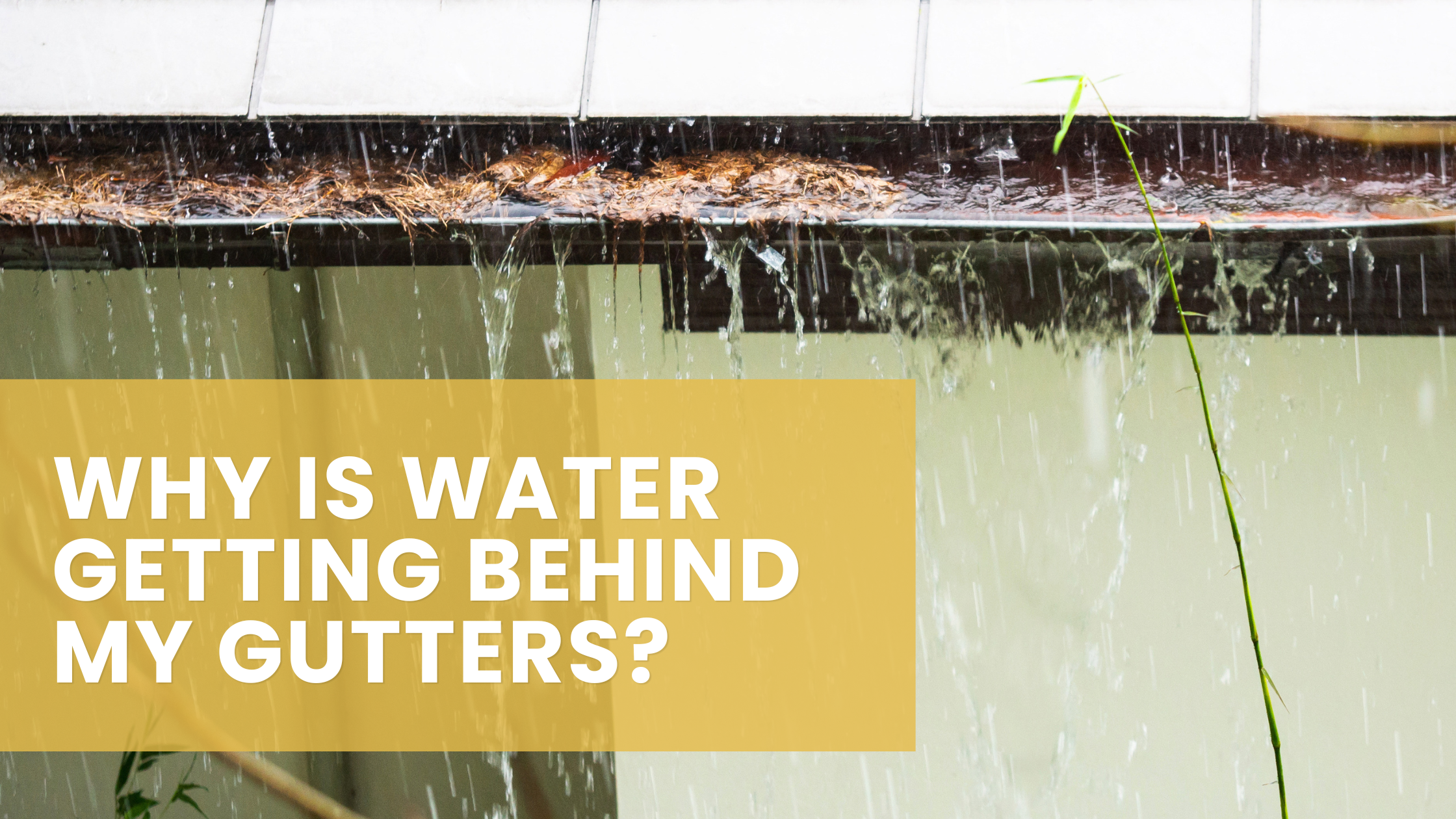

Why Is Water Getting Behind My Gutters? Signs of Fascia and Roof Edge Damage
If you’ve noticed water dripping behind your gutters instead of flowing through the downspouts, something may be wrong with your home’s drainage system. Water behind gutters can indicate improper gutter placement, damaged flashing, clogged downspouts, or deteriorating fascia boards. Left unaddressed, these problems can lead to wood rot and exterior water damage.
For homeowners in Medina and throughout Northeast Ohio, fall and early winter bring falling leaves, heavy rain, and freezing temperatures that can put gutters and roof edges to the test.
What Causes Water Behind Gutters?
1. Improperly Positioned Gutters
Gutters must sit correctly beneath the roof edge to catch rainwater. If they’re too far away from the roofline or have pulled loose over time, water may run behind them. Loose fasteners and damaged mounting points can also affect gutter positioning.
2. Damaged Drip Edge or Flashing
A roof’s metal drip edge helps direct water into the gutter. If it’s missing, damaged, or improperly installed, water can run behind the gutter and reach the roof edge. Damaged flashing can also allow moisture into vulnerable areas.
3. Rotted Fascia Boards
Fascia is the board along the roof edge where gutters are commonly attached. Repeated moisture exposure can cause the wood to rot, weaken gutter attachments, and allow more water to reach the roofline.
Signs of fascia damage include peeling paint, dark stains, soft or crumbling wood, and gutters pulling away from the house.
4. Clogged Gutters and Downspouts
Leaves, twigs, and other debris can restrict drainage during Northeast Ohio’s fall season. Although clogged gutters often overflow over the front edge, certain blockages can cause water to back up toward the roofline.
Cleaning gutters and downspouts may help, but persistent leaks behind the gutters could indicate another problem.
Why Should Northeast Ohio Homeowners Address This Before Winter?
Fall rain and clogged gutters can expose existing drainage problems. When temperatures drop, trapped moisture may freeze, adding stress to already damaged gutter and roof-edge components.
Water that repeatedly reaches fascia boards, soffits, or other exterior materials can contribute to deterioration over time.
Watch for water stains, peeling paint, loose gutters, damaged wood, or moisture near exterior walls. These signs don’t always identify the exact source, but they can indicate that an inspection is needed.
How Do You Fix Water Behind Gutters?
The right repair depends on the cause. Solutions may include cleaning gutters, adjusting their position, repairing flashing, replacing damaged fascia, or addressing roof and soffit damage.
Simply replacing the gutters may not solve the problem if deteriorated fascia or faulty roof-edge flashing is allowing water behind them. A professional inspection can help identify the source and determine which repairs are necessary.
Avoid climbing onto the roof or leaning ladders against loose gutters to investigate the issue yourself.
When Should You Call a Roofing Professional?
If water continues getting behind your gutters after cleaning, or you notice rotting fascia, sagging gutters, damaged soffits, or signs of a roof leak, consider scheduling an inspection.
Brightside Restoration helps homeowners in Medina and throughout Northeast Ohio address roofing and exterior restoration needs. Identifying gutter and roof-edge problems early can help prevent additional damage and protect your property.
Noticing water behind your gutters? Contact Brightside Restoration to discuss your home’s roofing and exterior needs.